
SEO has changed dramatically. What once revolved around keyword rankings, backlinks, and organic traffic has evolved into a much broader discipline that influences demand generation, brand visibility, customer acquisition, revenue, and even how a company appears in AI-generated answers.
A website can rank for hundreds of keywords and attract thousands of visitors without generating meaningful revenue. That is why leadership teams need to look beyond surface-level SEO reporting and focus on SEO KPIs that connect organic search performance with leads, customers, revenue, and business growth.
The right metrics help CEOs understand whether SEO is attracting the right audience, generating qualified demand, influencing the sales pipeline, improving acquisition efficiency, strengthening competitive visibility, and preparing the business for the changing search landscape.
Why traditional SEO metrics aren’t enough
SEO teams have always relied on metrics such as keyword rankings, impressions, clicks, backlinks, and organic sessions. These metrics are still useful because they help marketers diagnose performance.
A website may rank number one for hundreds of keywords without generating meaningful commercial opportunities. A keyword position is an indicator of visibility, not proof of business value.
SEO performance metrics should therefore go beyond visibility and show what happens after someone discovers the business through search. Organic traffic, rankings, and impressions can provide useful context, but the most important measurements are those that demonstrate whether visitors become qualified prospects, customers, and sources of revenue.
Which KPIs actually matter?
SEO service
An effective SEO service should be measured by the business results it helps generate rather than by the number of keywords optimized or technical tasks completed. SEO services can include technical SEO, content development, on-page optimization, link building, analytics, local search optimization, and ongoing performance improvements.
For CEOs, the important question is how these activities contribute to qualified traffic, leads, pipeline, revenue, and customer acquisition. A strong SEO service should provide transparent reporting that connects individual initiatives to broader business objectives, allowing leadership teams to understand the value of their investment.
AI visibility for B2B brands
The way B2B buyers discover information is changing as AI-powered search and answer platforms become increasingly important sources of information. AI visibility for B2B brands refers to how frequently and accurately a company is represented when potential customers use AI tools to research products, services, solutions, and industry topics.
CEOs should begin paying attention to whether their brand appears in relevant AI-generated answers, comparisons, recommendations, and discussions. While AI visibility is still an evolving area of measurement, monitoring brand mentions, relevant topic coverage, accuracy of information, and references to authoritative company content can provide useful insight into how a brand is appearing in emerging search environments.
Performance campaign tracking
Performance campaign tracking allows businesses to understand which SEO and marketing initiatives are generating meaningful outcomes. Rather than looking at traffic or rankings in isolation, companies can track how specific campaigns influence website engagement, leads, conversions, sales opportunities, and revenue.
This makes it easier for CEOs to identify which areas of marketing are contributing to business objectives and where resources may need to be adjusted. Accurate tracking also helps connect marketing activity with the customer journey, giving leadership a clearer understanding of how different campaigns contribute to growth.
AI answer optimization
AI answer optimization is becoming an important consideration as customers increasingly use AI systems to find information and research potential solutions. Instead of optimizing content only for traditional search rankings, businesses can create comprehensive, authoritative content that clearly addresses the questions their target audience is asking.
Companies should focus on developing useful information, demonstrating subject expertise, maintaining accurate business information, and building strong topical authority. CEOs do not necessarily need to track every individual AI response, but monitoring how the brand is represented across relevant AI-driven searches can provide insight into its visibility in this emerging discovery channel.
Organic revenue
Organic revenue is one of the most important SEO KPIs because it connects search performance with financial results. It measures the revenue generated by customers who arrive through organic search and complete a purchase or another revenue-generating action.
For ecommerce businesses, this can be relatively straightforward to track through organic transactions and sales revenue. For businesses with longer sales cycles, organic revenue may require connecting website analytics with CRM and sales data to determine which customers originated from organic search.
Tracking organic revenue gives executives a clearer understanding of whether SEO is producing financial value. An increase in organic traffic is useful, but an increase in organic revenue is far more meaningful from a business perspective.
CEOs should also look at organic revenue growth over longer periods rather than relying solely on monthly changes because SEO performance can be affected by seasonality, search demand, algorithm changes, and changes in the competitive landscape.
Qualified leads
For businesses that depend on enquiries, consultations, demos, sales calls, or other lead-generation activities, qualified organic leads are more valuable than simply counting website conversions. A website may generate a large number of form submissions through SEO, but those leads may not necessarily match the company's target audience or have genuine purchasing intent.
Qualified leads provide a better indication of the commercial value of organic traffic. Businesses should track the progression from organic visitor to lead, qualified lead, sales opportunity, and customer.
This makes it possible to identify whether SEO is attracting the right audience and whether the content and landing pages are reaching people with genuine commercial potential. When SEO reporting is connected to CRM data, CEOs can see whether organic search is contributing to the sales pipeline rather than simply producing website activity.
Non-branded organic traffic
Organic traffic does not always reveal whether a business is expanding its reach. Branded searches generally come from people who already know the company, while non-branded searches can indicate that potential customers are discovering the business through products, services, problems, or topics relevant to their needs.
Non-branded organic traffic is therefore an important SEO KPI for understanding whether SEO is helping the company reach new audiences. Growth in non-branded visibility can indicate that the website is appearing for searches beyond its existing brand recognition. This can be particularly valuable for businesses looking to increase market share and generate demand from people who have not previously interacted with the brand.
However, non-branded traffic should still be evaluated for quality. An increase in visitors from broad informational searches may have limited commercial value if those visitors rarely convert. CEOs should therefore consider non-branded traffic alongside qualified leads, customers, and revenue to determine whether the additional visibility is contributing to meaningful growth.
Customer acquisition
Customer acquisition cost is an important measure for any business investing in marketing, and SEO should be evaluated in the same way. Organic search does not require a direct payment for every visitor, but it still requires investment in content, technical SEO, strategy, tools, specialists, agencies, website development, and other resources.
Organic customer acquisition cost can help businesses understand how efficiently those investments are generating customers. The calculation can be based on the total SEO investment over a defined period compared with the number of new customers attributed to organic search during that period. Tracking this over time can reveal whether SEO is becoming more efficient as the website builds stronger rankings, content assets, authority, and organic visibility.
SEO ROI
SEO ROI brings multiple performance indicators together to evaluate whether the investment in organic search is generating sufficient financial return. A basic calculation compares the revenue attributable to SEO against the investment required to produce that revenue. However, attribution needs to be handled carefully because customers may interact with several marketing channels before becoming customers.
For executive reporting, SEO ROI should therefore be measured using consistent attribution rules and over an appropriate period. Short-term reporting can make SEO appear less effective because organic initiatives often require time to produce results. A longer-term view allows businesses to assess whether SEO investment is producing sustained growth in organic customers, revenue, and acquisition efficiency.
SEO ROI becomes especially valuable when compared with the performance of other acquisition channels. CEOs can use the data to determine where additional investment is justified and whether SEO is becoming more or less efficient as the business scales.
Conclusion
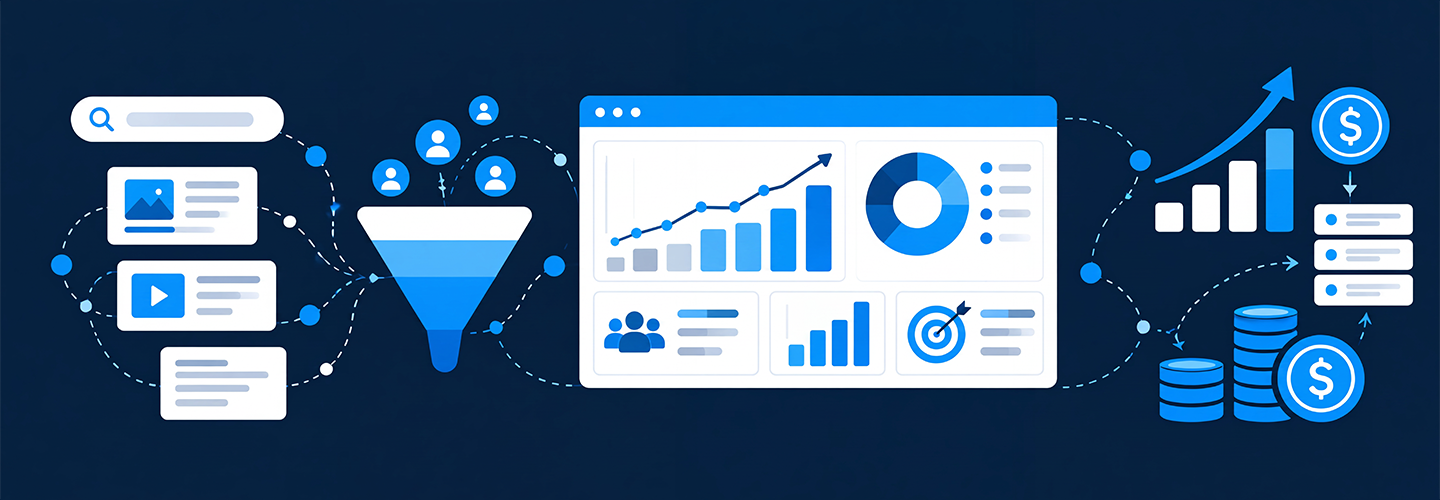
The most effective approach is to view SEO as a complete acquisition channel that moves potential customers from search visibility to website visits, from visits to conversions, and from conversions to revenue.
When SEO performance metrics are connected to sales and financial data, CEOs gain a much clearer understanding of whether organic search is helping the business acquire better customers, improve marketing efficiency, and create sustainable growth.
Ultimately, the purpose of SEO measurement is not to demonstrate that a website has gained rankings or traffic. It is to determine whether the business is gaining valuable customers and measurable revenue through organic search.
That is what makes SEO relevant at the executive level and turns search performance into a meaningful business-growth strategy.