
How to Increase AI Visibility for Your B2B Brand
B2B buyers are changing the way they search for information. Instead of clicking through dozens of search results, they are increasingly using AI tools to research solutions, compare vendors, evaluate technologies, and find answers to complex business questions.
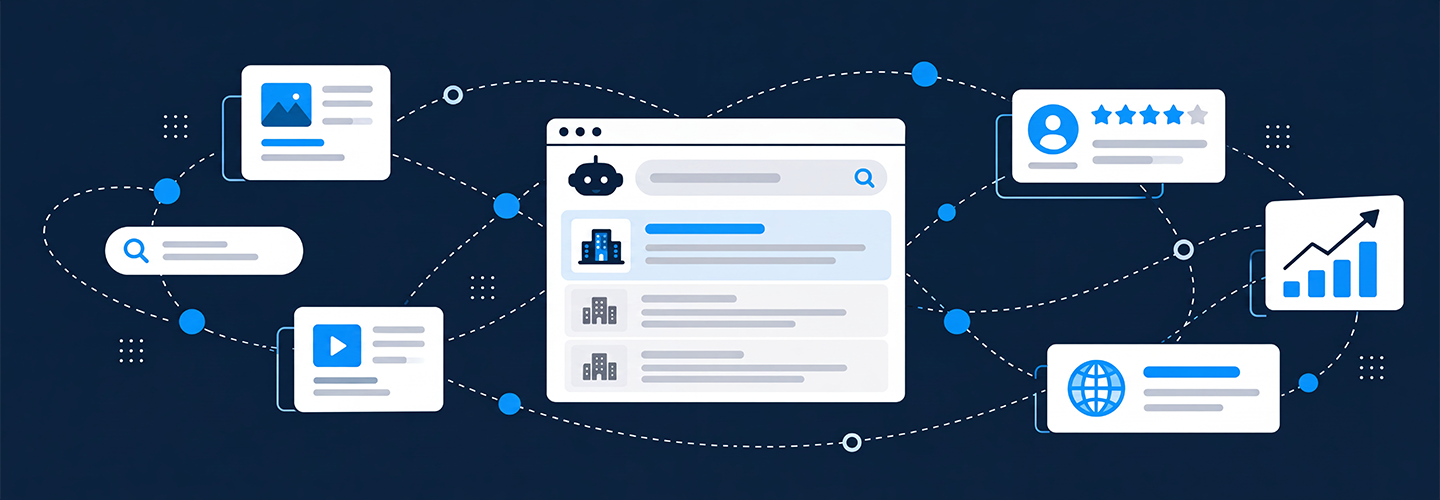
That is where AI visibility for B2B brands comes in. Your brand needs to be discoverable not only in traditional search results but also within AI-generated answers and recommendations. Being mentioned by AI platforms can put your business in front of potential customers much earlier in their buying journey.
To achieve this, B2B marketers need to rethink how they approach content, SEO, authority, and brand building. Strategies such as AI Search Optimization, AI SEO for B2B, and Generative Engine Optimization (GEO) can help businesses build a stronger presence across the rapidly evolving search landscape.
Understanding what AI visibility means for B2B brands
AI visibility refers to how frequently and prominently your brand appears in responses generated by AI-powered search and answer engines. In simple terms, it is about making sure your business is visible when potential customers use AI tools to research products, services, solutions, and industry topics.
Instead of receiving a traditional list of blue links, the buyer may get a curated answer containing several recommended brands, along with information about their features, use cases, and advantages. If your company is consistently absent from these responses, you could be losing valuable consideration before a prospect ever visits your website.
Ultimately, your brand’s visibility is influenced by several factors. This includes the quality and relevance of your content, industry mentions, customer reviews, and how clearly search engines and AI systems can understand your business.
Let’s understand how you can increase visibility for your brand.
Improving B2B brand visibility
AI platforms need reliable information to generate useful answers, which makes expertise an important part of your visibility strategy. Publishing generic content that repeats information already available across the web is unlikely to make your B2B brand stand out.
Instead of publishing another generic article about B2B marketing trends, share data from your own campaigns or explain how your team helped a client solve a specific or common marketing challenge. This type of first-hand expertise can strengthen your authority, improve B2B brand visibility, and give AI systems more valuable information to associate with your brand.
Focus on creating content based on knowledge and experience that your competitors cannot easily replicate. Include insights from your subject-matter experts, original research, customer experiences, industry data, case studies, and interviews.
AI SEO for B2B
AI SEO is the practice of optimizing digital content to rank in traditional search engines and earn citations in AI-powered answer platforms like Google AI Overviews, ChatGPT, and Perplexity. Whereas traditional SEO is the practice of optimizing a website to rank higher on search engine results pages (SERPs) like Google and Bing. It relies on manual keyword research, on-page text tweaks, technical website health, and backlink building to drive organic traffic
Rather than replacing traditional SEO with AI SEO, the two strategies should work together. Search engines and AI systems both need to be able to discover, crawl, understand, and evaluate your website content.
Start with the basics. Make sure your website loads quickly, important pages are indexable, your site architecture is easy to navigate, and your content is organized around relevant topics. Use descriptive headings, natural keyword placement, strong internal linking, useful metadata, and structured content where appropriate.
Your website should also communicate clearly:
- Who you serve.
- What you offer.
- Which problems you solve.
- What makes your solution different?
- Where your expertise comes from.
- Why should customers trust you?
A strong SEO foundation makes it easier for both traditional search engines and AI-powered platforms to understand your business and connect it with relevant queries.
Strengthening AI Search Optimization
Your website is only one part of your online presence. AI systems can encounter information about your company across many different sources, making a strong and consistent external presence increasingly valuable for AI search optimization.
Look for opportunities to earn mentions in respected industry publications, business directories, review platforms, podcasts, interviews, professional communities, and relevant third-party websites.
If your company specializes in enterprise software, being mentioned by reputable technology publications or industry experts can provide additional context about your expertise and market position. Building authority beyond your own website can support stronger AI search optimization, improve brand visibility, and help create a broader digital footprint around your brand.
Generative Search Optimization (GEO)
Generative Engine Optimization (GEO) is an emerging approach focused on improving how brands appear in AI-generated responses. While the field is still evolving, the underlying principle is pretty straightforward: make your brand easy for AI systems to understand, verify, and reference.
Start by creating authoritative content that clearly explains your products, services, expertise, and industry perspective. Support important claims with credible evidence and provide specific information rather than vague marketing statements.
Search for prompts such as:
- Who are the leading companies in (your industry)?
- What are the best (your product or service) providers?
- What should businesses consider when choosing (your solution)?
- How does (your company) compare with competitors?
Pay attention to where your brand appears, which competitors are mentioned, and whether the information about your company is accurate and concise. Look for inaccuracies, missing information, and competitor mentions. These insights can reveal opportunities to improve your content, positioning and ranks.
Monitor your AI visibility
Improving AI visibility should be an ongoing process rather than a one-time SEO project. Traditional SEO metrics such as rankings, organic traffic, conversions, and backlinks remain useful. However, B2B marketers should also begin tracking AI-specific visibility signals.
Create a set of relevant prompts based on your products, services, industry, and target customers. Run these prompts regularly across the AI platforms your audience is likely to use.
Track observations such as:
- Whether your brand is mentioned.
- How frequently it appears.
- Which competitors are mentioned.
- How your company is described.
- Which sources are cited.
- Whether the information is accurate.
- Which topics generate the most visibility.
You can then use these findings to identify content gaps, improve existing pages, develop new resources, and strengthen your overall positioning.
The goal isn't simply to get your brand mentioned once. It is to build a consistent, authoritative presence that keeps your business visible throughout the AI-driven buyer journey.
Conclusion
The future of B2B search isn't simply about getting your website to position one. It is about ensuring your company is present wherever buyers seek information. Successful AI brand visibility requires a combination of technical SEO, high-quality content, authoritative expertise, strong brand signals, and ongoing optimization.
Start by understanding your customers' questions. Create genuinely useful answers. Build authority across your website and the wider web. Then monitor how AI systems represent your brand and continuously improve.
The brands that invest in AI search today will be better positioned to become tomorrow's recommended solutions.